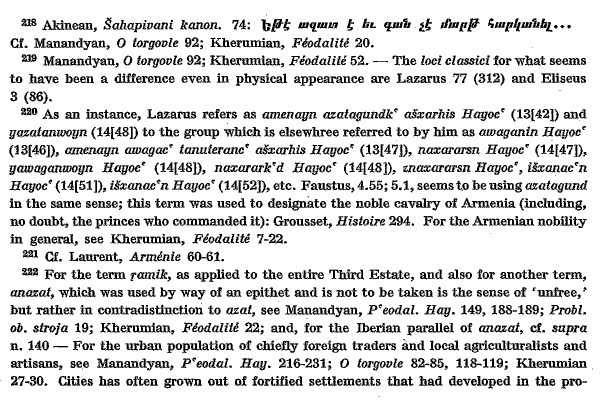
hapivan of A.D. 444 (218). Together with the princes, these nobles were wholly distinct from the rest of the people (219). Their oneness as a class with the dynasts was, further, manifested by the fact that certain derivatives of the term azat were used by the ancient writers to designate the entire nobiliary body without distinction between prince and noble knight (220). But the nobles seldom achieve notice in the pages of the historians, being outshone--exactly as are in the pages of Saint-Simon their counterparts, the gentilshommes--by more exalted dramatis personae (221).
The rest of the population (ramikk') was the tiers-état, the taxable class par excellence. It included the urban population, merchants--many of them foreigners: Jews, Greeks, Syrians--and artisans, and the vastly more numerousand less privileged peasants (shinakank'). The latter, moving steadily from the conditions of coloni, in which they had found themselves in the Artaxiad period, in the direction of full-fledged serfdom, remained personally free but were attached to the soil and dependent on the noble landlords. This dependence, entered into, like the attachment to the soil, in exchange for the lands tenanted by them, consisted in the corvée, various imposts, and miliary service in occasional levies in mass. It also included their subordination to the political authority of the lords, princely indeed and also knightly. Beneath the free social classes stood the slaves--chiefly war prisoners but also those who sold themselves into slavery--who were not very numerous in Armenia, even in the Hellenistic phase (222).